Home » Archives for June 2025
The God of Fire Perfume takes its conceptual roots from ancient mythology, where fire often symbolized both destruction and divine creation. Deities such as Hephaestus from Greek mythology or Agni from Hindu tradition embody this duality—forces capable of shaping worlds and incinerating them in the same breath. The name “The God of Fire” evokes this…
Imagining the Future: Science Fiction as a Visionary Tool Science fiction has always acted as a conceptual laboratory for future technologies, offering a space where imagination is not bound by the constraints of current scientific understanding. These fictional worlds provide a sandbox for thinkers and engineers to explore concepts far beyond today’s capabilities. From space…
The Evolution of Educational Technology Educational technology has undergone a transformative journey over the past century. Initially, tools such as chalkboards, overhead projectors, and film strips represented the height of classroom innovation. As personal computers emerged in the 1980s, they gradually found their way into schools, introducing new ways to deliver lessons, organize materials, and…
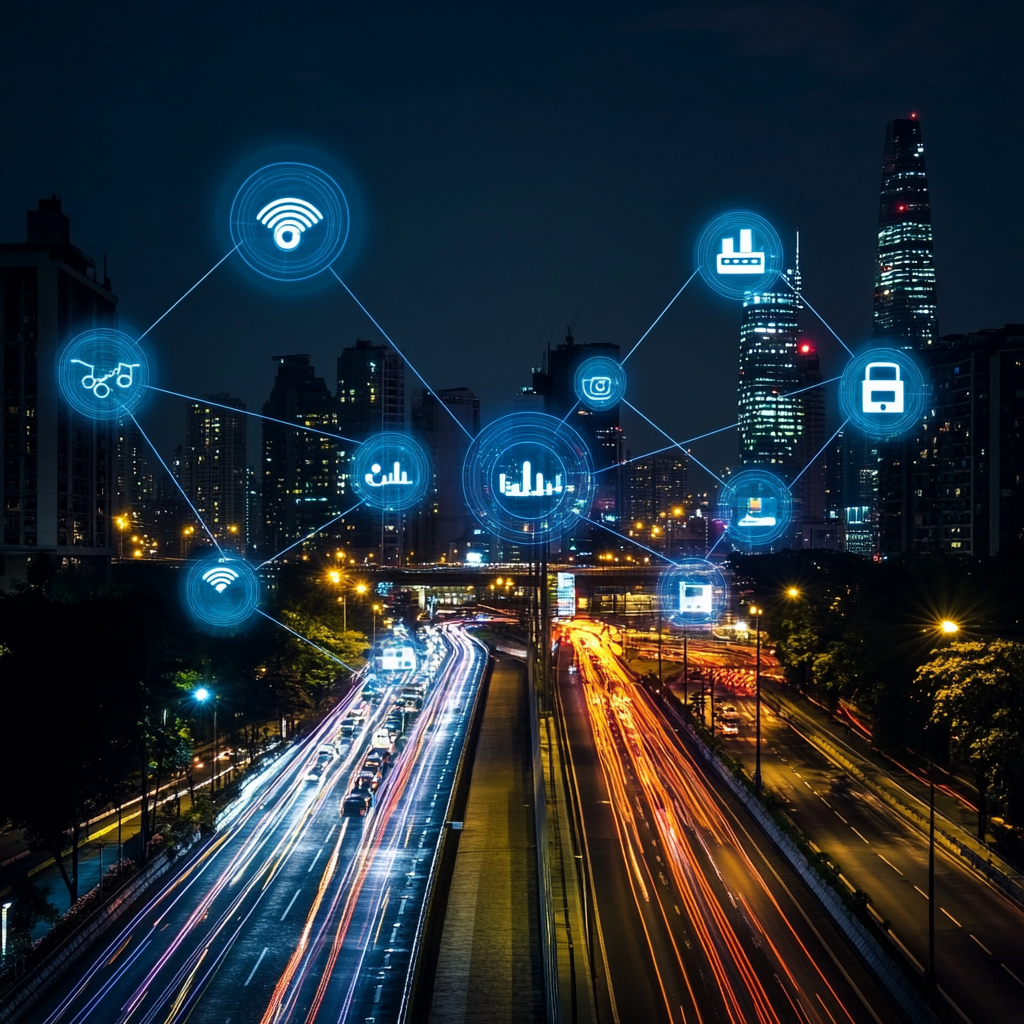
Urban Infrastructure and Smart Technologies Urban infrastructure in smart cities is becoming increasingly intelligent and responsive, thanks to the widespread deployment of IoT devices, data analytics platforms, and interconnected digital systems. These technologies work together to optimize the operation of utilities like electricity, water, and waste services, often without human intervention. For example, smart electricity…
The Fundamentals of Quantum Computing Quantum computing is based on the principles of quantum mechanics, which differ significantly from classical computing. At the core of quantum computers are qubits, or quantum bits, which unlike binary bits, can exist in multiple states at once due to superposition. Additionally, qubits can be entangled with each other, meaning…
Understanding Neurointerfaces: Bridging Brain and Machine Neurointerfaces, also referred to as brain-computer interfaces (BCIs), represent a rapidly growing field that seeks to establish direct communication channels between the human brain and external devices. These systems function by detecting and interpreting brain activity—such as electrical signals or blood flow changes—and translating those patterns into commands that…